The Strength Test That May Predict How Long You Live
When we talk about strength training, it’s often centred around performance or physique goals. People want to lift heavier weights, build muscle or improve athletic performance. Those outcomes are valuable, yet research over the past two decades has steadily revealed something much broader. Muscular strength appears closely linked to long-term health outcomes.
Scientists have increasingly recognised that strength reflects the state of several systems in the body at once. Muscle tissue, nervous system function, metabolic health, inflammation levels and daily activity patterns all contribute to how strong someone is. Because of this, strength has become a useful indicator of overall physiological resilience.
A growing body of evidence now suggests that strength is associated with survival. Individuals with greater muscular strength tend to experience lower risks of premature death. Recent research published in JAMA Network Open (2026) examined this relationship in a large cohort of older women and found that simple strength tests were strongly associated with longevity. One of the most interesting aspects of the study is that the strongest predictor was not a complicated laboratory measurement. It was a simple functional movement involving the legs.
Understanding why lower-body strength carries this predictive power offers useful insight for coaches, health professionals and anyone interested in healthy ageing.
Strength and Mortality in Older Women
The research was conducted as part of the Women’s Health Initiative, one of the largest and most influential long-term health studies involving older women in the United States. The analysis included 5,472 participants aged between 63 and 99 years. Researchers set out to examine how muscular strength relates to all-cause mortality.
Two straightforward strength measures were used:
- Grip strength: which is commonly used in clinical settings as a general marker of muscular strength and health status.
- The five-times sit-to-stand test: which measures lower-body strength and functional power.
The sit-to-stand test involves standing up from a chair and sitting back down five times as quickly as possible, usually without using the arms for assistance. This movement engages multiple muscle groups in the legs and hips and requires coordination and balance.
Participants were followed over time, allowing researchers to examine mortality outcomes. Statistical models were used to adjust for a range of factors that might influence health outcomes, including age, body mass index, physical activity levels and pre-existing health conditions. These adjustments allow researchers to isolate the independent association between strength and survival.
It is an interesting approach as it separates the effect of strength itself from other lifestyle factors that often accompany strength.
What the Researchers Found
The results showed a clear pattern. Participants with higher levels of muscular strength experienced significantly lower mortality risk during the follow-up period, with the association remaining statistically significant after full adjustment for confounding factors (p < 0.05).
Women with greater strength demonstrated roughly 30–35 percent lower risk of death compared with those with lower strength levels. The relationship remained strong even after adjusting for factors such as physical activity, body composition and medical conditions.
One of the most interesting observations was that strength predicted mortality independently of physical activity. Some individuals who reported moderate activity levels still displayed relatively low strength scores and experienced higher mortality risk. Others demonstrated strong performance on the strength tests and showed lower risk.
This finding highlights the fact that strength reflects more than simple activity levels. As mentioned, strength integrates multiple physiological systems, including muscle function, neuromuscular coordination and metabolic health.
The sit-to-stand test also emerged as a particularly meaningful indicator. Because it relies heavily on the muscles of the hips and legs, it provides insight into lower-body strength and functional capability.
These findings reinforce earlier research which has shown that muscular strength has a strong association with survival in older adults. A large prospective study by Ruiz and colleagues (2008) demonstrated that higher levels of muscular strength were linked to lower all-cause mortality in men. Later analyses confirmed that similar relationships exist across both sexes and multiple age groups.
Why Lower-Body Strength Matters So Much
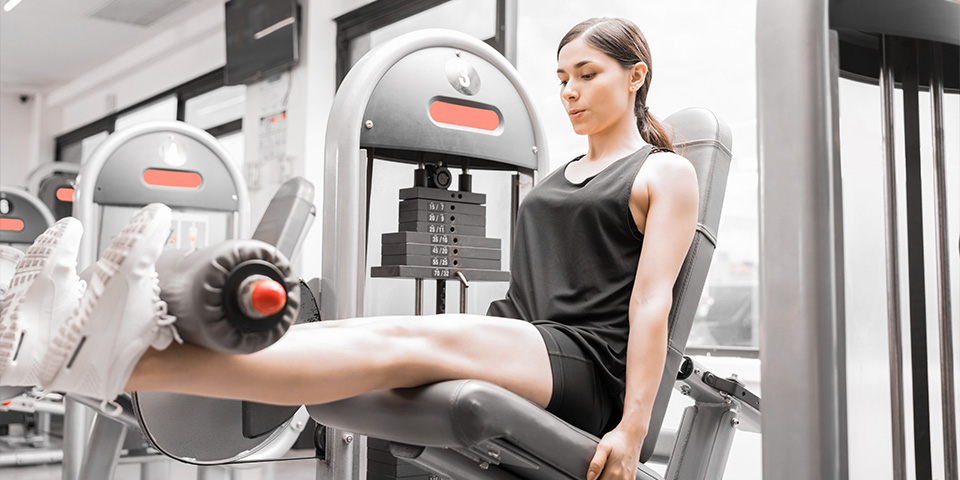
The strong association between leg strength and longevity becomes clearer when the physiology of skeletal muscle is considered.
The muscles of the lower body contain a large proportion of total skeletal muscle mass. This muscle tissue plays a central role in glucose metabolism and energy regulation. Skeletal muscle acts as a major site for glucose uptake following meals, which helps maintain stable blood sugar levels. Which leads into the theory that greater muscle mass and strength support improved insulin sensitivity and metabolic stability.
Skeletal muscle also functions as an endocrine organ. During physical activity and contraction, muscle fibres release signalling molecules known as myokines. These molecules influence inflammation, immune function and metabolic regulation throughout the body. Research led by Pedersen and Febbraio (2012) highlighted the importance of myokines in mediating many of the systemic health benefits associated with exercise.
Lower-body strength also supports mobility. Activities such as standing up, climbing stairs, walking and maintaining balance rely heavily on the muscles surrounding the hips and knees. As strength declines, daily tasks become more difficult and the risk of falls increases. As we are all aware, falls remain one of the leading causes of injury and loss of independence among older adults.
Strength is also closely tied to neuromuscular function. The nervous system controls muscle activation through motor units and age-related changes in motor neuron function contribute to declines in strength and power. Research on neuromuscular ageing shows that strength often declines before significant muscle mass loss becomes visible.
When these factors are considered together, they help explain why lower-body strength functions as a marker of whole-body health.
The Sit-to-Stand Test
The five-times sit-to-stand test is something of the “test du jour” in ageing research because of its simplicity and practicality. It requires no equipment and can be performed in almost any setting. Despite its simplicity, the test captures a broad range of physiological capacities.
Completing the movement requires coordinated action of the quadriceps, gluteal muscles, hamstrings and stabilising muscles of the trunk. The nervous system must activate these muscles efficiently to generate enough force to stand and sit repeatedly.
The movement also challenges balance and coordination. Rising from a chair shifts the body’s centre of mass and requires rapid stabilisation. The ability to perform this movement efficiently reflects functional capacity that carries over into everyday activities.
Research has shown that poor performance on sit-to-stand tests is associated with mobility limitations and increased fall risk. Studies involving older populations have also found associations between sit-to-stand performance and cardiovascular health markers.
From a coaching perspective, the test highlights the importance of functional strength. Movements that mirror real-world tasks provide insight into how well the body is functioning as an integrated system.
Tests like this can be very useful in practice, giving trainers a simple way to assess lower-body function, monitor progress and identify clients who may need extra support with strength, balance or mobility. It is also the kind of practical screening tool often introduced during a personal trainer course, because it helps coaches connect assessment findings to safe and effective programme design.
Implications for Strength Training and Coaching
This research gives trainers another good reason to prioritise lower-body strength across the lifespan. Movements such as squats, step-ups, lunges and hip hinges train the large muscle groups of the legs and hips while also improving coordination, balance and joint stability. Those adaptations make a big difference in everyday life and become increasingly important with age.
Resistance training also supports muscle protein synthesis, insulin sensitivity and mitochondrial function, all of which contribute to better metabolic health. That wider health impact is one reason muscular strength continues to show up in research as an important predictor of long-term outcomes, including cardiovascular health and all-cause mortality. These links are often explored further in strength & conditioning coach courses, where programming is viewed through both a performance lens and a long-term health lens.
Strength as a Marker of Healthy Ageing
Researchers increasingly view muscular strength as an important indicator of healthy ageing because it reflects the combined state of muscle function, neuromuscular health and metabolic resilience. In some clinical settings, grip strength is already used as part of frailty screening, which shows how seriously strength is now taken as a health marker.
The encouraging part is that strength remains trainable well into later life. Resistance training has been shown to improve strength, mobility and quality of life in older adults, including those in their seventies and eighties. This growing body of evidence has also shaped fitness education, where a PT course may introduce functional assessments and programming principles that connect strength development with long-term health and independence.
Finally…
The link between strength and longevity is now one of the clearest themes in exercise science. The 2026 JAMA Network Open study adds to that evidence by showing that a simple test such as the five-times sit-to-stand can offer meaningful insight into long-term health. It also reinforces the importance of lower-body strength, given its close connection to mobility, metabolic health and physical resilience. For fitness professionals, the takeaway is straightforward: helping clients maintain strong, capable legs is a practical way to support healthier ageing and long-term function.
Reference
- Wang, Y., et al. (2026). Muscle Strength and Mortality Risk Among Older Women in the Women’s Health Initiative. JAMA Network Open. Click here to review the full research article.
- Ruiz, J. R., Sui, X., Lobelo, F., et al. (2008). Association between muscular strength and mortality in men: prospective cohort study. BMJ. Click here to review the full research article.
- Pedersen, B. K., & Febbraio, M. A. (2012). Muscles, exercise and obesity: skeletal muscle as a secretory organ. Nature Reviews Endocrinology. Click here to review the full research article.
Turn Strength Research Into Client Results
If the research on strength and longevity has sparked your interest, developing a deeper understanding of strength programming can make a real difference to the clients you work with. Studies continue to show how important muscular strength is for long-term health. In the 2026 JAMA Network Open study of 5,472 women aged 63–99, those with higher muscular strength had around a 30–35% lower risk of death during the follow-up period compared with weaker participants. Findings like this reinforce why strength training deserves a central place in modern coaching. The Strength & Conditioning Exercise Specialist & Master™ Diplomas from TRAINFITNESS explore how to design effective resistance training programmes, develop lower-body strength and apply evidence-based methods to improve performance, mobility and long-term physical resilience in the clients you train.
Strength & Conditioning Exercise Specialist & Master Diploma™ – In-Person, Live-Virtual & Distance Study