Most of us have a client whose blood pressure sits a little higher than they would like. Maybe their GP has had a quiet word. Maybe they are on medication and want to do something themselves alongside it. The usual advice is to walk more and eat better, which is sound but slow. What surprises a lot of trainers is that one of the most effective forms of exercise for lowering resting blood pressure is also one of the least sweaty.
High blood pressure, or hypertension, is the most common long-term condition our clients walk in with, whether they mention it or not. Around a third of UK adults have raised blood pressure, and a large share of them do not know it. It is the single biggest treatable risk factor for stroke and heart attack, which is why the NHS and the National Institute for Health and Care Excellence (NICE) treat getting it under control as a priority. Exercise has always been part of that picture. What has changed in the last couple of years is which exercise the evidence now points to first.
For decades the standard prescription was aerobic exercise, the brisk walking, cycling and swimming that everyone associates with a healthy heart. That advice was never wrong, and it still holds. But a large 2023 analysis published in the British Journal of Sports Medicine (Edwards et al., 2023) turned the running order on its head. Pulling together 270 randomised controlled trials and almost 16,000 people, the research group ranked the different forms of exercise by how much they lowered resting blood pressure. Isometric exercise, the held, static contractions that look like nothing much from the outside, came out on top. Not joint top. Top. And the time commitment behind that result is what makes it so useful for our clients. We are talking about roughly 24 minutes a week.
What Isometric Exercise Actually Is
It is worth being clear about the term, because it is one of those bits of jargon that sounds more technical than it is. An isometric contraction is simply a muscle working hard without the joint moving. The muscle is generating force, but the limb is held still rather than lifting or lowering anything. Pushing your palms together as hard as you can is isometric. So is holding a plank, or sitting against a wall with your knees bent as if perched on an invisible chair.
Compare that with the exercise most clients picture. A bicep curl is isotonic, the muscle shortens and lengthens as the weight goes up and down. A brisk walk is aerobic, lots of repeated movement keeping the heart rate up. Isometric work is the odd one out, because nothing visibly moves. The muscle is under steady tension, the joint angle stays fixed and the effort is sustained for a set period rather than counted out in repetitions.
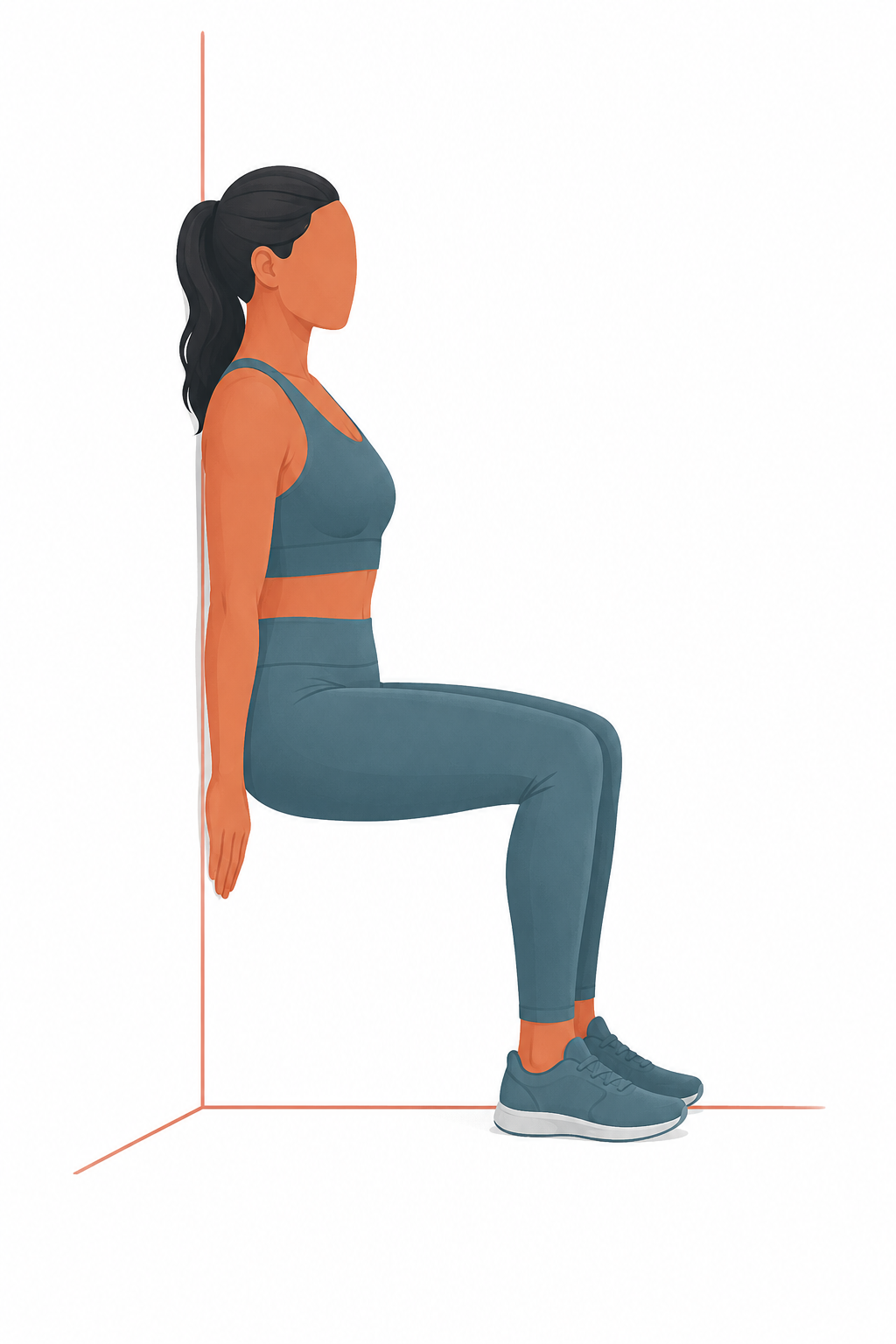
The three exercises that show up again and again in the blood pressure research are the wall sit, the isometric leg extension and the handgrip. The wall sit, sometimes called a wall squat, is the one with the strongest evidence and the easiest set-up, which is why it tends to be the headline. A client simply leans against a wall and slides down until their thighs are somewhere towards parallel with the floor, then holds. No kit, no gym, no skill barrier.
The Evidence That Changed the Ranking
The study that brought isometric exercise to wider attention was the network meta-analysis by Jamie Edwards and colleagues at Canterbury Christ Church University, published in the British Journal of Sports Medicine in 2023 (Edwards et al., 2023). A network meta-analysis is a way of comparing several treatments against each other even when they were never tested head to head, by pooling the whole web of trials. In plain terms, it lets you build a league table of what works best.
The headline numbers are worth knowing. Across the pooled trials, isometric exercise training lowered resting blood pressure by around 8.2 mmHg systolic and 4.0 mmHg diastolic. Systolic is the top number, the pressure when the heart beats, and it is the figure most closely tied to stroke and heart attack risk. For comparison, aerobic exercise in the same analysis produced a reduction of around 4.5 mmHg systolic, and dynamic resistance training around 4.6 mmHg. Isometric exercise nearly doubled it.
When the researchers ranked each mode for lowering systolic blood pressure, isometric exercise came top with a probability score of over 98 per cent, ahead of combined training, dynamic resistance, aerobic exercise and high-intensity interval training. Drilling further into the specific exercises, the isometric wall sit was the single most effective sub-mode for bringing down systolic pressure. That is a noteworthy finding, because the wall sit is also the easiest of the lot to teach and to do at home.
To put an 8 mmHg drop in perspective, a sustained reduction of that size in a population would be expected to lower the risk of stroke and of dying from heart disease by a sizable margin. These are the kinds of numbers that get a single blood pressure medication taken seriously. To get them from a handful of minutes of wall sits a week is genuinely impressive, and it is why the finding has been picked up well beyond the research journals.
Why Holding Still Lowers Blood Pressure
The obvious question is how something so still can have such an effect. The mechanism is a little counterintuitive, because during the contraction itself, blood pressure actually goes up. When a muscle holds a hard contraction, it squeezes the blood vessels running through it and restricts blood flow to that area. The body responds by raising blood pressure to push blood past the squeeze. Then, the moment the contraction is released, blood rushes back into those vessels. A 2022 systematic review of the mechanisms, again from the Canterbury group (Edwards et al., 2022), points to this repeated squeeze-and-release cycle as the trigger for longer-term change.
Over weeks of training, that repeated cycle appears to improve the way the blood vessels and the nervous system manage pressure. The lining of the blood vessels, called the endothelium, becomes better at releasing the signals that let vessels relax and widen. The autonomic nervous system, the automatic control that sets background vessel tone, shifts towards a calmer setting. The overall resistance the heart has to push against, what researchers call total peripheral resistance, comes down. The net result, measured at rest weeks later, is a lower resting blood pressure.
The plain-English version to give a client is this. Each held contraction asks the circulation to work briefly against a squeeze, and over time the body responds by getting better at keeping the pipes relaxed and the pressure low when it is not being challenged. It is a training effect, the same principle as any other, just applied to the plumbing rather than the muscles you can see in the mirror.
The 24-Minute-a-Week Protocol
The reason this topic is so appealing for time-poor clients is the dose. The protocol that comes out of the research is short, simple and repeatable. The most studied version is built around the wall sit.
A typical session is four wall sits of two minutes each, with two minutes of rest between them. That is eight minutes of actual holding per session, done three times a week. Eight minutes times three sessions is 24 minutes of contraction a week, which is where the headline figure comes from. Add the rest periods and each session takes around 14 minutes start to finish, so the whole week is well under an hour including the breaks.
The intensity is set so that the contraction is hard but sustainable for the full two minutes. In the research settings this is often calibrated to a percentage of a maximum effort, but for a general client a practical guide is a held position they can just about maintain for two minutes, where the last 20 or 30 seconds is a genuine struggle. For the wall sit, the depth of the squat is the dial. Shallower is easier, deeper towards a 90-degree knee bend is harder. The handgrip version uses a hand dynamometer or a simple squeeze device held at a set percentage of maximum grip, and the isometric leg extension uses a fixed bar or strap that the leg pushes against without moving.
One of the most practically useful findings for adherence comes from a 2023 randomised controlled trial published in the Journal of Clinical Hypertension (Cohen et al., 2023). The trial found that the blood pressure reductions achieved with three sessions a week over twelve weeks were then maintained with just a single session a week. That is a gift for client adherence. You can sell a more intensive block up front to get the result, then keep it with a once-a-week maintenance dose that almost anyone can fit in.
A Sample Wall Sit Protocol
| Variable | Practical Prescription |
|---|---|
| Exercise | Wall sit (back flat against wall, thighs towards parallel) |
| Holds per session | 4 holds of 2 minutes each |
| Rest between holds | About 2 minutes |
| Intensity | Hard but sustainable for the full 2 minutes |
| Frequency | 3 sessions a week for the first 12 weeks |
| Maintenance | About 1 session a week to hold the gains |
| Weekly contraction time | Around 24 minutes |
Keeping It Safe
This is where a qualified trainer earns their place, because the same squeeze-and-release mechanism that makes isometric exercise effective also means the pressure response during the hold has to be respected. The single most important coaching point is breathing. Clients must keep breathing steadily throughout the hold and never hold their breath.
Breath-holding during a strained effort is called the Valsalva manoeuvre, and it sends blood pressure spiking far higher than the exercise itself ever would. Many people do it instinctively when they brace against something hard, so it has to be coached out actively. The cue is simple. Tell the client to breathe out slowly during the hardest part and to keep a steady, relaxed breathing rhythm going for the whole two minutes. A useful test is to have them count out loud or talk through the hold. If they can speak, they are not holding their breath.
A few other safeguards are worth building in. Screen the client first, ideally with a recent blood pressure reading and a clear picture of any medication and existing heart conditions. Isometric work is generally well tolerated, but a client with poorly controlled or very high blood pressure, or with a known cardiac condition, should have GP sign-off before starting, and the protocol fits best as an addition to their wider care rather than a replacement for it. Keep the contractions to a sustainable intensity rather than an all-out maximal effort, which is unnecessary for the blood pressure benefit and pushes the acute response higher. And keep the environment calm and unhurried, because the goal is a controlled, steady effort, not a competition.
Wall Sit, Handgrip or Leg Extension
The wall sit gets most of the attention, but it is worth knowing the three main isometric modes and where each fits, because clients are not all the same. They all work through the same squeeze-and-release principle, and all three appear in the research, but they differ in kit, in convenience and in the muscle mass involved.
The wall sit, or wall squat, uses the large muscles of the legs and tends to produce the biggest blood pressure effect of the three. That is partly down to the sheer amount of muscle being squeezed, which makes the circulatory challenge greater. It needs no equipment beyond a flat wall, it is easy to scale by changing the depth and it is simple to teach. For most clients, it is the first-choice exercise. The main limitation is that it does ask something of the knees, so a client with significant knee pain may need a shallower position or one of the alternatives.
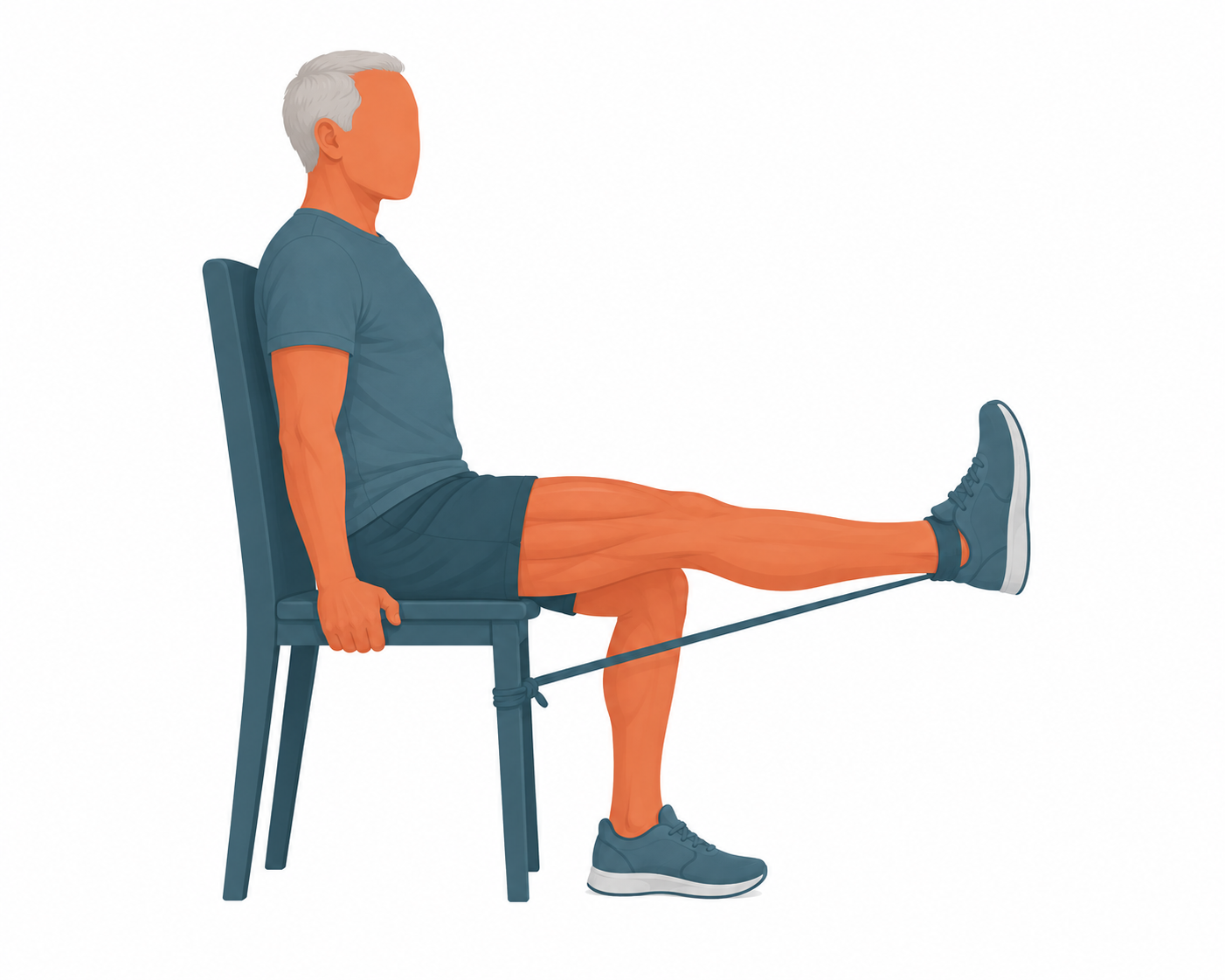
The isometric leg extension is the version used in much of the original UK research and is performed against a fixed bar, strap or immovable resistance, with the leg pushing but not moving. It targets the thigh in a more isolated way than the wall sit and is easy to standardise, which is why it featured heavily in the lab work. In a gym it can be set up on a leg-extension machine with the pin out so the weight cannot move, or with a strap anchored to a fixed point. It is a useful option where a client cannot comfortably hold a wall sit but can still load the thigh.
The handgrip version is the most convenient of the three and the most studied historically, because it uses a small, cheap squeeze device or hand dynamometer that a client can keep in a drawer. The trade-off is that it works a small amount of muscle, so the blood pressure effect, while real, tends to be a little smaller than the leg-based options in head-to-head comparisons. Its great strength is portability. For a client who travels constantly, or who simply will not commit to a floor-based routine, a handgrip protocol done in front of the television is far better than nothing. The typical prescription mirrors the wall sit in shape, four holds of around two minutes at a sustainable squeeze, with rest between, three times a week.
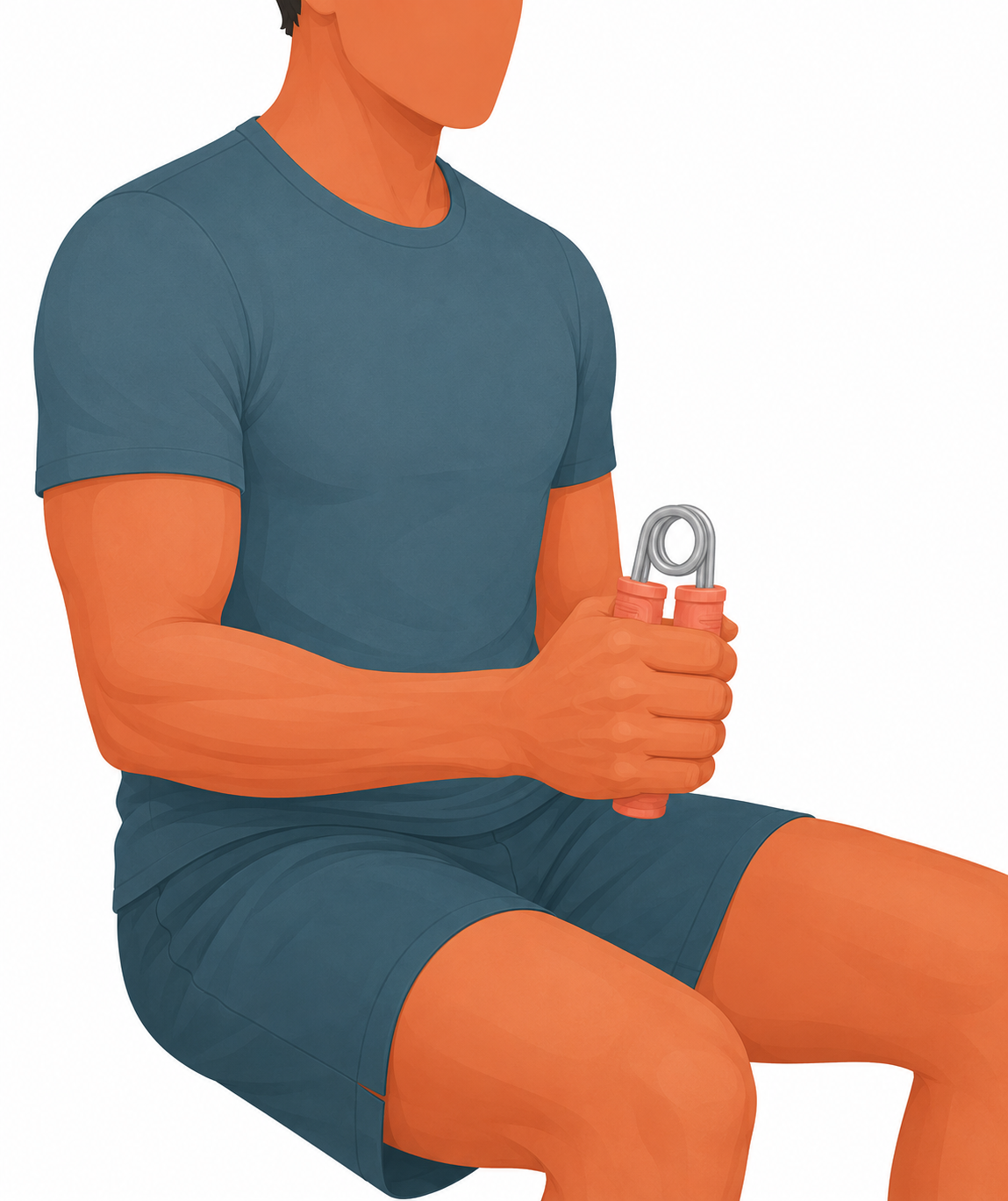
The practical steer is to lead with the wall sit for the strongest effect and the lowest barrier, keep the isometric leg extension in reserve for clients who need a more controlled or knee-friendly option, and reach for the handgrip when convenience or travel is the deciding factor. The best protocol, as with all exercise, is the one the client will actually do.
The UK Research Behind It
A nice detail for UK trainers is that a good deal of the modern isometric blood pressure work has come out of a British research group. The team at Canterbury Christ Church University in Kent, led by Jonathan Wiles and Jamie O’Driscoll alongside Jamie Edwards, has produced much of the recent evidence, including the headline 2023 network meta-analysis and the mechanistic and review work that underpins it. This is not a fringe overseas finding being awkwardly applied to a UK setting. It is, in large part, UK research.
That is so important for how it sits with the rest of UK practice. The NHS and NICE guidance on managing high blood pressure, set out in the NICE guideline NG136, leads on lifestyle change, including regular physical activity, alongside medication where it is needed. Isometric exercise is not yet named as a specific recommendation in those guidelines, and the researchers themselves are careful to say bigger trials are needed before it is. But it fits squarely within the lifestyle and physical-activity side of the existing advice, and it gives a PT a specific, evidence-backed way to act on the general instruction to be more active. Organisations such as Blood Pressure UK already encourage regular activity as part of self-management, and a structured isometric protocol is a clean, low-cost way to deliver exactly that.
Who It Suits Best
The clients who stand to gain the most are often the ones who get the least from conventional exercise advice. Older adults are a clear example. Many have raised blood pressure, many find sustained aerobic exercise harder on the joints and the lungs, and many are wary of heavy lifting. A wall sit asks nothing of the joints in the way a jog or a heavy squat does, needs no equipment and can be scaled simply by adjusting the depth. For an older client managing their blood pressure, it is an accessible, low-barrier option that fits neatly alongside their walking and their strength work.
Clinical and clinical-adjacent populations are another strong fit. Clients referred through a GP exercise scheme, clients with type 2 diabetes who often carry raised blood pressure alongside it, and clients in cardiac rehabilitation settings working under medical supervision can all benefit, with appropriate screening and sign-off. The low equipment requirement and the gentle movement profile make isometric work easy to deliver in a home, a community hall or a clinic, not just a gym.
It also suits the time-poor client who keeps falling off the wagon with longer sessions. The honest appeal of 14 minutes, three times a week, with a single weekly session to maintain, is that it is realistic. Adherence is the quiet variable that decides whether any programme works, and a protocol this short removes the most common excuse before it is made.
How a PT Programmes It
Isometric work is best framed as one tool in a broader plan, not a standalone fix. For most clients with raised blood pressure, the sensible structure is to keep their aerobic activity and any resistance training going, and to add the isometric protocol on top as the targeted blood pressure piece. The modes stack rather than compete, and the wider activity brings its own benefits for weight, mood, blood sugar and general fitness.
Start by establishing a baseline. Take a resting blood pressure reading at the start, ideally averaged over a couple of sittings, so there is a number to track against. Then run the three-sessions-a-week wall sit block for twelve weeks, coaching the breathing carefully in the early sessions until it becomes second nature. Progress the difficulty by deepening the wall sit rather than by adding time, since the two-minute hold is the studied dose. Re-check the resting blood pressure at the end of the block, and if it has come down, move the client onto a once-a-week maintenance session to hold the gain.
Set expectations honestly. The blood pressure change builds over weeks, not days, so a client checking their reading after a single session will see nothing useful. Frame the first few weeks as laying the groundwork, the same conversation you would have about any training adaptation. And keep the GP in the loop where the client is on medication, because if their blood pressure drops, their prescription may need reviewing, which is a doctor’s call rather than a trainer’s.
Where the Research Is Heading
The picture is still developing, and it is worth being measured about it. A 2024 review in Sports Medicine (Edwards et al., 2024) set out the current state of play and made the case for isometric exercise as a serious adjunct in managing blood pressure, while noting that many of the underlying trials are small and that bigger, longer studies are needed before it is written formally into clinical guidelines. A 2025 multilevel meta-review (Zhou et al., 2025) looking specifically at clients ranging from raised-risk to established hypertension confirmed sizable reductions in both systolic and diastolic pressure, while reinforcing that the effect is real and clinically relevant across that range.
For a personal trainer, the practical position is clear enough. Isometric exercise is not a replacement for medical care, for medication where it is prescribed, or for the broader lifestyle work around diet, weight and activity. It is a well-evidenced, low-cost, low-barrier addition that a qualified trainer can deliver safely and that suits exactly the kinds of clients who often struggle with conventional exercise. That is a strong place to be.
Bringing It Into Your Coaching
Many of us find our clients carrying a blood pressure reading they are not happy about and a vague sense that they ought to do more cardio. Being able to offer them something specific, evidence-backed and genuinely manageable is the kind of thing that builds trust and keeps clients coming back. A wall sit they can do in their kitchen, three times a week, that has good research behind it for lowering blood pressure, is an easy thing for a client to say yes to.
The main point here is that the dose is small, the mechanism is sound and the safety comes down to a few clear coaching points, chiefly the breathing. Screen properly, coach the breath, run the block, track the reading and move to maintenance. For older adults and clinical-population clients in particular, isometric exercise is one of the most useful additions a confident, qualified personal trainer can bring to the table.
References
Edwards, J.J., Deenmamode, A.H.P., Griffiths, M., Arnold, O., Cooper, N.J., Wiles, J.D. and O’Driscoll, J.M. (2023). Exercise training and resting blood pressure: a large-scale pairwise and network meta-analysis of randomised controlled trials. British Journal of Sports Medicine, 57(20), pp.1317-1326. Click here to review the full research article.
Edwards, J.J., Coleman, D.A., Ritti-Dias, R.M., Farah, B.Q., Stensel, D.J., Lucas, S.J.E., Millar, P.J., Gordon, B.D.H., Cornelissen, V., Smart, N.A., Carlson, D.J., McGowan, C., Swaine, I., Pescatello, L.S., Howden, R., Bruce-Low, S., Farmer, C.K.T., Leeson, P., Sharma, R. and O’Driscoll, J.M. (2024). Isometric Exercise Training and Arterial Hypertension: An Updated Review. Sports Medicine, 54(6), pp.1459-1497. Click here to review the full research article.
Edwards, J.J., Wiles, J. and O’Driscoll, J. (2022). Mechanisms for blood pressure reduction following isometric exercise training: a systematic review and meta-analysis. Journal of Hypertension, 40(12), pp.2299-2306. Click here to review the full research article.
Cohen, D.D., Aroca-Martinez, G., Carreno-Robayo, J., Castaneda-Hernandez, A., Herazo-Beltran, Y., Camacho, P.A., Otero, J., Martinez-Bello, D., Garcia-Gonzalez, J.F., Rincon-Riano, H. and Lopez-Jaramillo, P. (2023). Reductions in systolic blood pressure achieved by hypertensives with three isometric training sessions per week are maintained with a single session per week. The Journal of Clinical Hypertension, 25(4), pp.380-387. Click here to review the full research article.
Zhou, Y., Zhang, Y. and colleagues (2025). Efficacy and moderators of isometric resistance training on resting blood pressure among patients with pre- to established hypertension: a multilevel meta-review and regression analysis. BMC Sports Science, Medicine and Rehabilitation, 17, 243. Click here to review the full research article.
Turn Clinical Confidence Into a Specialism
If this article has changed how you think about working with raised blood pressure, the natural next step is to deepen your skills with older and clinical-population clients. Isometric training is at its most valuable exactly where conventional exercise gets harder to apply, with older adults, with clients managing long-term conditions and with people referred in through their GP. The more confident you are screening, programming and progressing for these clients, the more of them you can safely take on.
The Exercise for Older Adults Course builds precisely that capability, taking you beyond general gym instruction into the considerations that count for an ageing or clinical client, from blood pressure and balance to strength, mobility and safe progression. Paired with a full PT Diploma, it positions you as the trainer local GPs and community schemes are happy to refer to. Take a look at the full range of courses here.
Exercise for Older Adults Course – Distance Study