Walk into most gyms at 6am and you’ll spot a group of clients in their forties and fifties who’ve been showing up diligently for years. Many of them have been told, somewhere along the way, that this is the life stage where yoga, Pilates or low-impact cardio should take centre stage. The newest research however, tells a very different story. Bone density drops faster during the perimenopausal transition than at any other point in a woman’s adult life, lean muscle quietly slips away and insulin sensitivity starts to wobble. The single most effective tool we’ve got to push back on all three of those things is the one most midlife women have been steered away from, and that is resistance training with noticable load.
In this article we take a look at what recent evidence base shows, why resistance training has moved from optional to central in every serious menopause guideline and how to programme it with enough load, frequency and intent to have a big influence on your clients’ long-term health.
What Happens in the Perimenopausal Window
Perimenopause is the transition in the years leading up to menopause, when oestrogen production starts to fluctuate and fall. For most women it begins somewhere in their forties, lasts four to eight years on average and ends with the final menstrual period. The physiological changes across this window are sizable and they all point in the same clinical direction.
Oestrogen is a key regulator of bone remodelling. When it drops, bone resorption (the breaking down of old bone) starts to outpace bone formation. Lifetime bone loss in women runs to roughly 30 to 50 per cent of peak bone mass and a disproportionate slice of that loss is concentrated in the narrow window spanning the year before and the few years immediately after the final menstrual period. That’s why this specific window has become the focus of so much research activity in the last couple of years.
Muscle goes the same way. Sarcopenia (the age-related loss of lean muscle) accelerates from the early forties onwards and the drop in type II fast-twitch fibres is especially pronounced in perimenopausal women. That has knock-on consequences for metabolic rate, fall risk and how easily clients will rise out of a chair twenty years from now.
Metabolic health takes a hit too. Fat redistribution shifts towards the midsection, insulin sensitivity declines and lipid profiles trend in the wrong direction. Many of us find our clients arriving at this stage having changed nothing about their nutrition or exercise habits yet feeling like their bodies have changed overnight. Unfortunately, that’s physiology at play. The good news is that we can do a great deal about it.
Why Resistance Training Sits at the Top of the Evidence Pile
One of the most important reviews in recent times is Hsu et al. (2024), published in PM&R. The team pulled together trials covering more than 1,200 postmenopausal women and compared the effects of different exercise strategies on bone mineral density and functional capacity. The headline signal was that loaded, progressive exercise (resistance training in particular) was linked to improvements in lumbar spine bone mineral density and in the functional outcomes that predict independence in later life, such as gait speed, chair-stand time and grip strength.
The point isn’t that exercise replaces bone medications where they’re clinically indicated. It’s that for the huge number of women who aren’t on any pharmacological treatment, the modality of exercise they’re doing has a big influence on whether they arrive at their sixties with healthy bones or with a bone density issue waiting to emerge.
A 2025 network meta-analysis in Scientific Reports pushed the evidence further. This type of study compares multiple interventions against each other simultaneously, so you get a clearer ranking of what works best when several options are available. Across pooled data from dozens of trials, combined aerobic and resistance training ranked first for lumbar spine bone mineral density, followed by aerobic exercise and resistance training individually. For the femoral neck (a common site of hip fracture) combined training came out top again, with resistance training and whole-body vibration filling out the top three.
The key finding is that resistance training featured in every top-ranked protocol. Combined exercise claimed first place not because it diluted the lifting but because it layered aerobic work on top of it. Pure aerobic exercise only delivered meaningful bone gains when it already involved load — think jogging or hill walking rather than cycling or swimming. Strip the resistance component out and the rankings fall apart.
What the STOP-EM Pilot Is Telling Us About Programme Design
One of the most interesting current pieces of work is the Strength Training for Osteoporosis Prevention during Early Menopause (STOP-EM) pilot, run by a University of Calgary team and published as a protocol by Alexander et al. (2025) in BMJ Open. It’s a randomised waitlist-controlled trial delivering a supervised nine-month high-intensity resistance and impact training (HiRIT) programme to perimenopausal and early postmenopausal women, with bone microarchitecture, muscle strength and quality of life as the primary outcomes.
What’s so useful about STOP-EM, apart from the headline results (which are still pending), is the design itself. Researchers in this field are no longer testing whether generic exercise helps. They’re testing whether specific, heavy, progressive resistance programmes help more than gentler alternatives, because the weight of evidence already points in that direction. The programme blueprint draws heavily on LIFTMOR, the influential Australian HiRIT trial from a few years ago that showed bone mineral density gains in postmenopausal women on heavy lifts like deadlifts and squats at 80 to 85 per cent of one-rep max.
Mayo Clinic’s expert commentary from late 2024 summed up the clinical mood shift neatly. Dr May Al-Araji, writing for the Mayo Clinic News Network, argued that weightlifting for perimenopausal and postmenopausal women had been under-prescribed for decades and that the current evidence now supports making it a first-line recommendation rather than an advanced option.
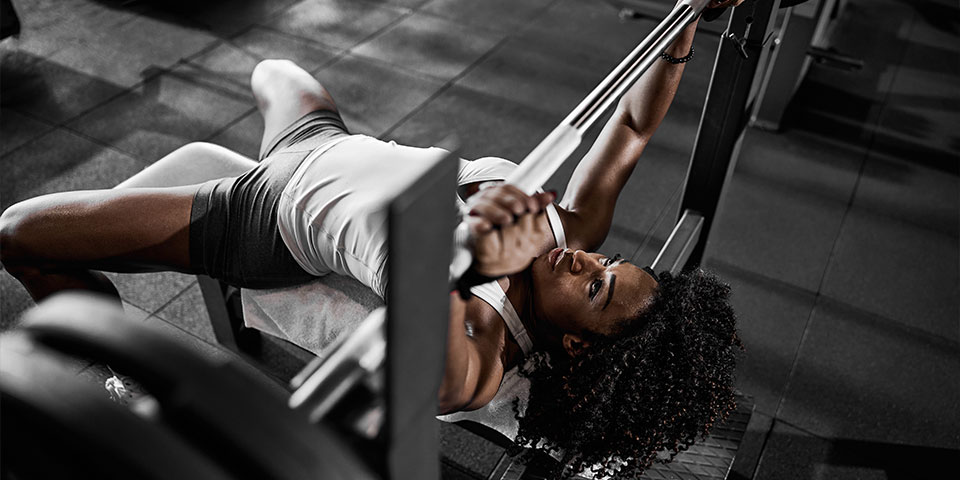
Where Yoga, Pilates and Low-Impact Cardio Fit In
None of the above is an argument against yoga, Pilates or low-impact cardio. Each of them has its place. Yoga and Pilates are excellent for mobility, balance, core strength and body awareness, and they tend to carry a strong adherence profile because clients enjoy them. Low-impact cardio protects cardiovascular health and is often what gets previously inactive midlife women moving regularly at all.
The point is that none of those modalities is sufficient as the primary prescription for protecting bone, muscle and metabolic health through the perimenopausal window. Treating them as the lead with resistance training as an occasional add-on inverts what the evidence suggests should be the other way round. A sensible weekly prescription for most perimenopausal clients has resistance training twice or three times a week as the backbone, with yoga, Pilates, mobility work or low-impact cardio built around it rather than replacing it.
Programming Resistance Training for the Perimenopausal Client
Here’s where a lot of coaches feel uncertain, because programming for this population isn’t simply a scaled-down hypertrophy template. Three programming levers do most of the work.
Load
The bone density signal is load-dependent. Research broadly suggests external loads under about 60 per cent of one-rep max produce a limited osteogenic effect, while loads in the 70 to 85 per cent range produce the strongest response. For clients new to resistance training, the progression should move into that range over eight to twelve weeks, not avoid it. Starting with three-kilo dumbbells for the rest of the client’s training life is not a plan, it’s a holding pattern. Coach technique well early, then let load progress with real intent.
Frequency
Two to three resistance-training sessions a week is the sweet spot as highlighted in the current research. One session a week is too little to drive bone remodelling reliably. Four sessions is often unnecessary for a client whose primary training goal is long-term health rather than competitive strength. Pair that core with one or two easy-pace conditioning sessions and one mobility or yoga session and you have a sustainable weekly frame that respects recovery.
Intent
Compound movements beat isolation movements when time is short, because they load the hip, spine and shoulder complex in a way that triggers the strongest osteogenic signal. A perimenopausal client’s programme should be built around squat, hinge, push, pull and carry patterns, with accessory work filling in the gaps. A small dose of impact work (low-volume jumping, controlled landing drills, step-ups with intent) adds a bone-specific stimulus that complements the resistance work nicely. Bone responds to novel, high-strain, fast-rate loading. A few pogos or small box jumps at the start of a session deliver exactly that.
A Practical Twelve-Week Template
Here’s what a sensible first twelve weeks might look like for a perimenopausal client who is reasonably active but new to structured resistance training.
Weeks 1 to 4, movement acquisition and base strength. Two sessions a week of full-body resistance training. Goblet squats, trap-bar deadlifts (or Romanian deadlifts), dumbbell bench or floor press, seated row, farmer carries. Three sets of 8 to 10 reps at roughly a 7 out of 10 rate of perceived exertion. Warm up with hip mobility and cool down with stretching. Cardio stays easy and optional.
Weeks 5 to 8, progressive loading. Same movement selection but loads creep up, rep ranges drop slightly (3 to 4 sets of 6 to 8 reps) and one set each week pushes a little closer to genuine effort. A third session can be added if the client is tolerating the work well. Introduce one or two light impact drills at the start of each session, for example 3 sets of 5 step-ups with a controlled landing.
Weeks 9 to 12, genuine loading and skill. Loads on main lifts now sit in the 70 to 85 per cent one-rep max range on working sets, with 3 to 5 reps on compound movements and 6 to 10 on accessory work. Impact drills progress to low-volume jumping (a handful of pogos, small box jumps or broad jumps at the start of sessions). By the end of this block the client should have a few genuinely heavy lifts in their week, they should feel stronger in daily life and the programme should have become something they look forward to rather than something they tolerate.
From there the programme stays in roughly the same shape. Load progresses where it can. Volume stays sensible. A deload week lands every six to eight weeks. The long-term goal is a client who is still training at real intensity at sixty and beyond, because that’s where the protective effect on bone and muscle really comes from.
Three Common Mistakes to Avoid
Under-loading is the single most common error. Coaches default to light dumbbell work because the client is nervous or new to lifting, and then they never leave that zone. It feels safer in the short term but it doesn’t build the bone or muscle adaptations the research is pointing to. Coach the technique well, build confidence session by session, then progress load with real intent.
Over-loading volume is the second. Perimenopausal clients often recover a little more slowly than they did fifteen years ago, and dropping a high-volume hypertrophy template on them produces fatigue and soreness without the bone-density pay-off. Hit the key lifts hard and keep total session volume sensible. Quality beats quantity.
Ignoring impact is the third. A resistance programme with no impact component is still a strong programme, but adding a small dose of jumping, hopping or landing drills gives the skeleton a very different signal to respond to. Two or three minutes of impact work at the start of a session, done well, is one of the best bang-for-buck additions you can make, especially for clients who aren’t already running or playing a team sport.
Where This Takes Your Coaching
If you have female clients moving through their forties and fifties, this is one of the most important conversations you’ll have with them. The messaging many of them grew up with (cardio for weight loss, yoga for midlife, lifting for younger women) is out of date and the research of the last couple of years has made that very clear. A well-programmed resistance training plan is the single strongest lever you have to protect their bone density, muscle mass and metabolic health through the most physiologically demanding decade of their adult lives.
And if you’re reading this as a learner rather than a coach, the practical point is the same. Knowing how to programme for this population confidently, with the research to back you up, is one of the fastest-growing specialisms in the industry. Demand is strong and women in midlife are actively looking for coaches who understand what their body is going through and what actually works.
Reference
- Alexander, C.J. et al. (2025). Strength training for osteoporosis prevention during early menopause (STOP-EM): a pilot study protocol for a single centre randomised waitlisted control trial in Canada. BMJ Open, 15(2), e093711. Click here to review the full research article.
- Hsu, H.-H., Chiu, C.-Y., Chen, W.-C., Yang, Y.-R. and Wang, R.-Y. (2024). Effects of exercise on bone density and physical performance in postmenopausal women: a systematic review and meta-analysis. PM&R, 16(12), 1358-1383. Click here to review the full research article.
- Li, X., Zhu, J., Xu, L., Zhang, H., Fu, X. and Wang, Y. (2025). Effect of different types of exercise on bone mineral density in postmenopausal women: a systematic review and network meta-analysis. Scientific Reports, 15, 11740. Click here to review the full research article.
- Mayo Clinic News Network (2024). Perimenopause, menopause and weightlifting: expert explains value for bone health. Click here to review the full research article.
Ready to Turn This Into a Midlife Specialism?
If this article has got you thinking about how you’d programme for the perimenopausal clients in your book, the Exercise & Nutrition for Menopause course is the fastest way to turn that interest into a working specialism. It covers the endocrine basics, the current evidence on bone and metabolic health, programming principles that respect menopausal symptoms and the nutrition knowledge you’ll need to run joined-up sessions with GPs, physios and nutrition professionals. You’ll walk out ready to offer midlife-specific services to your female clients straight away.
If you want to go further and build midlife women’s health into the centre of your career, the Women’s Health & Exercise Specialist and Master Diplomas™ take this to a deeper level. You’ll cover the full endocrine, musculoskeletal and behavioural picture of women’s health across the lifespan, with the Master tier adding the advanced assessment and programme design skills that employers and private clients are actively looking for.
Exercise & Nutrition for Menopause Course – Distance Study
Women’s Health & Exercise Specialist/Master™ – Distance Study, In-Person & Live-Virtual