2026 Update
What’s Shaping Fitness This Year
Alright, we’ll hold our hands up. This article usually lands in January, fresh off the back of the new year buzz, when everyone’s full of good intentions and gym car parks are heaving. But here we are in March, fashionably late and arguably in a better position for it. Why? Because we’ve actually had time to see which trends have genuine staying power and which ones fizzled out before February. So rather than predicting the future, we’re giving you a well-informed look at what’s already making waves in 2026 and more importantly, what it means for you as a fitness professional.
This year’s landscape is fascinating. The industry is moving away from chasing intensity for its own sake and instead leaning into longevity, smarter technology, community connection and a more holistic view of health. The American College of Sports Medicine (ACSM) published its 20th annual Worldwide Fitness Trends survey, gathering insights from over 2,000 clinicians, researchers and exercise professionals, and the results paint a clear picture of where things are heading (McAvoy et al., 2025). Meanwhile here in the UK, the industry is booming with fitness event participation, strength-focused programming and a renewed appreciation for mind-body practices.
1. Strength Training Takes Centre Stage (and Keeps You Young)
If there’s one trend that has well and truly cemented itself in 2026, it’s the cultural shift towards strength training. This goes beyond aesthetics and performance. The conversation has moved firmly into the territory of longevity, healthspan and biological ageing.
A Life Time wellness survey from late 2025 found that 42.3% of respondents cited getting physically stronger as their primary health goal for 2026, making it the top response. A further 46.5% said they planned to lift more weights in the new year (Life Time, 2025). That’s a significant chunk of the population prioritising the barbell over the treadmill.
The science backing this up is compelling. Research published in the journal Biology examined data from 4,814 US adults aged 20 to 69 and found a striking relationship between regular strength training and telomere length, a key biomarker of cellular ageing. Telomeres are the protective caps at the ends of our chromosomes, and their length is associated with biological age. Those who engaged in roughly 90 minutes of resistance training per week had telomere lengths corresponding to a biological age approximately 3.6 years younger than non-lifters (Tucker, 2024). A broader analysis by the same lead researcher found that those training with weights for about an hour, three times a week, exhibited telomere lengths suggesting they were biologically up to eight years younger.
And it doesn’t stop there. A 2026 study published in JAMA Network Open, analysing over 5,400 women aged 63 to 99, found that greater muscle strength was independently associated with a significantly lower risk of all-cause mortality, even among those who didn’t meet recommended aerobic exercise guidelines (JAMA Network Open, 2026). The message is hard to ignore: muscle strength is emerging as one of the most reliable markers of healthy ageing.
For fitness professionals, this is enormous. Clients are coming to you not just to look good but to invest in their long-term health. Personal trainers who can articulate the science of strength and longevity will stand out. And it’s not just about heavy lifting in the traditional sense. Yoga, Pilates and circuit-based training all contribute to building functional strength, which means instructors across multiple disciplines have an opportunity to ride this wave.
If you’re looking to deepen your knowledge in this area, the Strength and Conditioning course from TRAINFITNESS is a brilliant next step for qualified PTs, while those just starting out can build a strong foundation with the Personal Trainer Diploma.
2. Wearable Technology Becomes Indispensable
Wearable technology has topped the ACSM’s fitness trends list for 2026, and honestly, that’s no surprise. The difference this year is in the depth and sophistication of what these devices can do. We’ve gone well beyond step counting. Today’s smartwatches, fitness trackers and smart rings are monitoring heart rate variability (HRV), blood pressure, blood glucose, skin temperature, sleep architecture and recovery readiness (ACSM, 2025).
The ACSM survey notes that nearly half of US adults now own a fitness tracker or smartwatch. As lead author Cayla McAvoy put it, the question is no longer about adoption but about how to use these tools meaningfully to support health and behaviour change (McAvoy et al., 2025).
For personal trainers and coaches, knowing how to leverage tracking data is now a must. Wearable data can inform programming decisions in real time. If a client’s HRV is tanked from a poor night’s sleep, you can pull back on intensity and focus on mobility or recovery work instead. If their resting heart rate is trending downwards over weeks, you can see the cardiovascular adaptations happening. The WHOOP 2026 Health Report highlighted that members who lift regularly are physiologically younger according to their platform’s biological age metrics, and the integration of muscular load tracking alongside cardiovascular strain is giving trainers a much richer picture of client progress (WHOOP, 2026).
The key for fitness professionals is learning to interpret this data intelligently rather than being overwhelmed by it. Understanding the basics of HRV, recovery metrics and sleep quality reporting will add genuine value to your client interactions.
3. AI-Powered Coaching: Your New Assistant, Not Your Replacement
Artificial intelligence in fitness has moved past the novelty stage. In 2026, it’s becoming embedded in the infrastructure of the industry. According to the American Council on Exercise (ACE), AI has shifted from being a trend to becoming the backbone of programming, member communication, scheduling and personalisation (ACE, 2025). Apps like Ray and Peloton are now using image recognition and generative AI to provide real-time form feedback, rep counting and adaptive programming.
Strava’s 2025 Year in Sport report found that 46% of respondents said they’d use AI as a smart coach for sports, with Gen Z leading that charge (Strava, 2025). Meanwhile, the Life Time wellness survey showed 35.3% of people already use AI tools regularly or occasionally to support workouts, nutrition or health, with a further 36.4% curious to explore them (Life Time, 2025).
But here’s the thing that should reassure every fitness professional reading this: the data consistently shows that AI enhances human coaching rather than replacing it. The algorithm can handle day-to-day programming adjustments and automate check-ins, but clients still want a real person for accountability, motivation, emotional support and the kind of nuanced judgement that comes from experience. The trainers who will thrive are those who embrace AI as a tool in their toolkit. Use it to streamline admin, generate workout variations or track client trends, and then pour your energy into the human connection that keeps clients coming back.
TRAINFITNESS offers an AI Prompts in Fitness course designed specifically to help fitness professionals harness this technology effectively. If you’ve been curious about how to integrate AI into your practice, that’s a solid starting point.
4. Exercise Meets GLP-1: The Biggest Opportunity for Personal Trainers
If there’s one trend that’s creating entirely new client demographics for personal trainers, it’s the rise of GLP-1 receptor agonist medications like semaglutide (Wegovy/Ozempic) and tirzepatide (Mounjaro/Zepbound). These weight-loss drugs have taken the world by storm, and the fitness industry needs to pay attention.
The ACSM placed exercise for weight management at number three on its 2026 trends list, its highest position ever, and the conversation around these medications is a major driver (ACSM, 2025). A review published in Frontiers in Clinical Diabetes and Healthcare in late 2025 made the case clearly. They stated that while GLP-1 medications produce significant short-term weight loss, exercise is superior for maintaining lean mass and cardiorespiratory fitness. Combining the two yields additive benefits, including greater reductions in metabolic syndrome severity, abdominal obesity and inflammation (Frontiers, 2025).
The concern is real. Clinical trials have shown that approximately 25-40% of weight lost on GLP-1 drugs comes from lean mass rather than fat (ACE, 2025). Without structured resistance training, clients risk losing muscle alongside fat, compromising their metabolic rate and functional capacity. There’s even a term for it that’s entered popular culture: the “skinny fat” phenotype.
What this has created is a clear professional opportunity for trainers. People on GLP-1 medications need guidance on resistance training, protein intake and progressive overload to preserve and build lean tissue while losing weight. A case series published in PMC demonstrated that patients who combined GLP-1 therapy with resistance training 3-5 days per week and adequate protein intake (0.7-1.7g per kg of body mass) achieved remarkable body composition changes, with some actually increasing lean mass while losing over 25% of total body weight (PMC, 2025).
For fitness professionals, this means being informed, not judgemental, about these medications and positioning yourself as the expert who helps clients get the best possible results from their treatment. The Obesity and Diabetes Management course is directly relevant here, as is the body fx Nutrition Programme for those wanting to offer comprehensive nutritional support.
5. Mind-Body Integration and Mental Health
Exercise for mental health climbed to number six on the ACSM’s 2026 trends list, up from eighth place in previous years. Meanwhile, ukactive research found that 79% of gym members joined specifically to improve their mental health and wellbeing (ukactive, 2025). That’s a staggering figure that fundamentally shifts how we should think about programming and marketing fitness services.
Yoga, Pilates and mobility-focused practices have been grouped under a new combined category by the ACSM for 2026 called “Balance, Flow, and Core Strength,” which ranks fifth overall. Participation in yoga, Pilates and mobility-focused classes rose by 27% between 2022 and 2024, driven largely by boutique studios and a broader cultural shift towards holistic health (ACSM, 2025). These formats bridge movement quality with mental wellbeing, and their resurgence after a pandemic-related dip is significant.
Hot Pilates and infrared studio classes are also gaining traction in the UK, with studios like Psycle, KXU and Casa Core in London offering heated barre, Pilates and sculpt sessions that use infrared heat panels to directly warm the body. The added challenge of heat, combined with reported benefits for inflammation and flexibility, is drawing in a curious new audience (Country & Town House, 2026).
For yoga and Pilates instructors, this is a brilliant time to be in the industry. The demand for mind-body modalities is growing, and the recognition that these practices deliver genuine mental health benefits gives your work real clinical credibility. For personal trainers, consider integrating breathwork, mobility flows or short mindfulness segments into your sessions. Clients increasingly want to leave feeling better mentally, not just physically.
6. Community-Driven Fitness and Social Sport
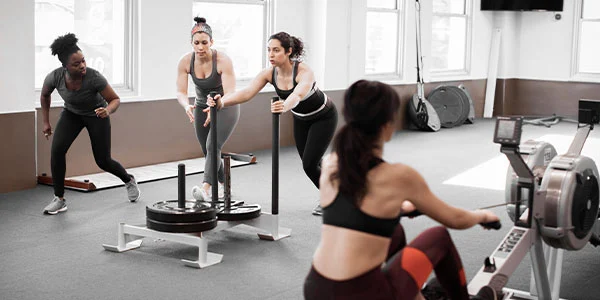
The era of the lone wolf gym-goer isn’t over, but 2026 is seeing a massive surge in community-based fitness. New to the ACSM’s top 20 this year is a category reflecting the growing popularity of recreational sport clubs and social fitness, from pickleball and padel to run clubs and HYROX competitions (ACSM, 2025).
The numbers are hard to argue with as HYROX participation jumped from around 175,000 athletes between 2023 and 2024 to over 650,000 from 2024 to 2025, with organisers predicting they’ll hit one million soon (Country & Town House, 2026). Strava reported that new clubs nearly quadrupled in 2025, and 58% of people surveyed said they’d made new friends through exercise groups (Strava, 2025). Here in the UK, Park Run attracts an average of 135,000 monthly Google searches, and over 1.1 million people applied for the London 2026 marathon, a record number (Xplor Gym, 2025).
Padel has become one of the UK’s fastest-growing sports, driven by its social accessibility and genuine cardiovascular benefits. The beauty of these social sports is that they attract people who might never set foot in a traditional gym but are motivated by fun, connection and casual competition.
To leverage this trend, think about how you can create community within your services. Group training sessions, preparation programmes for events like HYROX or Tough Mudder, and run clubs linked to your personal training business can all build loyalty and attract new clients. The Outdoor Fitness course and Circuit Training course are excellent for expanding your toolkit into group and outdoor settings.
7. Functional Fitness: Training for Real Life
Functional fitness has been climbing the ranks for several years, and in 2026 it ranked in the top 10 in seven of the nine global regions surveyed by the ACSM. It was the number one trend in Spain and a leading trend across markets including Taiwan, Finland, Mexico and Australia (ACSM, 2025).
The premise is to train movements that translate to everyday life. Squatting, hinging, pushing, pulling, carrying, rotating. For older adults, this means maintaining the ability to get out of a chair, carry shopping or climb stairs with confidence. For younger clients, it means building resilience against the postural demands of desk work and the physical unpredictability of sport and recreation.
What’s notable in 2026 is the convergence of functional fitness with longevity training. Practitioners are increasingly integrating corrective exercise, physical therapy-inspired techniques and cognitive challenges into functional programming. This isn’t just about goblet squats and farmer’s walks anymore. It’s about building programmes that keep people moving well for decades.
The Advanced Personal Trainer course is ideal for those looking to develop more sophisticated, evidence-based programming skills, while the Exercise for Older Adults course will equip you to work effectively with the ageing population.
8. Recovery Goes Mainstream
Recovery has officially graduated from “nice to have” to “non-negotiable.” Les Mills identified JOMO (the joy of missing out) as a key trend for 2026, championing the idea that being intentional with your time and prioritising self-care matters just as much as showing up for every session. The old “no pain, no gain” mentality is giving way to a more balanced approach, particularly as operators recognise that rest and recovery are equally important for sustainable progress (Les Mills, 2025).
Cold plunges, infrared saunas, percussive therapy devices, compression garments and structured sleep protocols are all becoming standard parts of how serious exercisers approach their training. Assisted stretching services are also booming, with industry reports suggesting an annual growth rate of more than 20% for businesses offering stretch services. In the UK, one-to-one assisted stretching studios like Stretched, with locations in Manchester, Glasgow and Edinburgh, are pioneering the concept with full-body mobility assessments and expert-led sessions (Women’s Fitness, 2026).
For fitness professionals, integrating recovery into your offering is a smart move. You might consider adding Sports Massage to your skill set or exploring the Advanced Stretching course to broaden your services. Clients who see recovery as part of their training are likely to be more consistent, have fewer injuries and stay with you longer.
9. Active Ageing: Fitness for the Long Haul
Exercise for older adults ranked second on the ACSM’s 2026 trends list, reflecting a demographic reality that the fitness industry can no longer afford to overlook. Data from the Health and Fitness Association shows that adults over 65 now visit gyms and studios more frequently than any other age group (ACSM, 2025). Age UK’s Exercise and Physical Activity Survey 2025 reported that almost half of respondents (45%) exercised daily (Age UK, 2025).
A landmark 47-year longitudinal study from the Karolinska Institute, published in the Journal of Cachexia, Sarcopenia and Muscle, tracked participants from age 21 and revealed the patterns of physical capacity decline over a lifetime, reinforcing the critical importance of maintaining strength and fitness as we age (Westerståhl et al., 2025).
This demographic represents an enormous and growing client base. These are people who want to remain independent, active and engaged with life. They need trainers who understand age-related considerations like sarcopenia, joint health, balance and fall prevention.
TRAINFITNESS offers several pathways here, including Exercise for Older Adults, Exercise Referral and Low Back Pain Management, all of which position you to serve this rapidly expanding market.
10. Hybrid Training: The Baseline, Not the Bonus
In previous years, hybrid training (the combination of in-person and online coaching) was talked about as an emerging model. In 2026, it’s simply how things are done. According to data from Trainerize, nearly half of all personal trainers now run hybrid as their primary delivery model (Trainerize, 2026).
A mature hybrid model isn’t just offering Zoom sessions alongside gym-based training. The most effective approaches bundle live sessions with app-based programming, on-demand content and consistent digital check-ins. When a client travels, gets busy or has a low-energy week, the hybrid setup means they don’t disappear entirely. They can follow a home workout, complete a recovery session or check in via the app. That continuity is gold for retention.
For trainers building or growing their business, hybrid delivery also opens up geographical reach. You’re no longer limited to the clients who live within a 15-minute drive of your gym. The Personal Trainer Diplomas from TRAINFITNESS prepare you for both in-person and remote delivery, and the growing range of CPD courses available through distance study means you can upskill from anywhere.
What This All Means for You
The themes running through 2026’s fitness industry are consistent. Longevity over aesthetics. Data-informed decisions. Community and connection. Holistic wellbeing. Recovery as standard. These aren’t fads that’ll burn out by summer. They represent a genuine maturation of the fitness industry, and they play directly into the hands of well-qualified, adaptable fitness professionals.
The clients walking through your door (or logging into your app) are more informed than ever. They’re tracking their HRV, asking about GLP-1 medications, training for HYROX and thinking about their healthspan. Meeting them where they are requires continuous professional development and a willingness to evolve.
Reference
- ACSM (2025). 2026 ACSM Worldwide Fitness Trends: Future Directions of the Health and Fitness Industry. ACSM’s Health & Fitness Journal, 29(6). Click here to review the full research article.
- McAvoy, C.R. et al. (2025). 2026 ACSM Worldwide Fitness Trends. ACSM’s Health & Fitness Journal, 29(6). Click here to review the full research article.
- Life Time (2025). 2026 Life Time Wellness Survey Results. Click here to review the full research article.
- Tucker, L. (2024). Telomere Length and Biological Aging: The Role of Strength Training in 4814 US Men and Women. Biology, 13(11). Click here to review the full research article.
- LaMonte MJ, Hyde ET, Nguyen S, et al. Muscular Strength and Mortality in Women Aged 63 to 99 Years. JAMA Netw Open. 2026;9(2):e2559367. Click here to review the full research article.
- WHOOP (2026). WHOOP 2026 Health Report. Click here to review the full research article.
- Strava (2025). Year in Sport Trend Report. Click here to review the full research article.
- ACE (2025). 10 Fitness Trends in 2026 and Beyond. American Council on Exercise. Click here to review the full research article.
- Frontiers in Clinical Diabetes and Healthcare (2025). GLP-1 agonists and exercise: the future of lifestyle prioritisation. Click here to review the full research article.
- PMC (2025). Preservation of lean soft tissue during weight loss induced by GLP-1 and GLP-1/GIP receptor agonists: A case series. SAGE Open Medical Case Reports. Click here to review the full research article.
- ukactive (2025). Gym Membership Sales Report. Click here to review the full research article.
- Country & Town House (2026). Fitness Trends Set To Dominate 2026. Click here to review the full research article.
- Xplor Gym (2025). 25 Fitness Trends for 2026 That Gyms Need to Know About. Click here to review the full research article.
- Les Mills (2025). 7 Key Trends Shaping Fitness in 2026. Click here to review the full research article.
- Women’s Fitness (2026). Wellness & Fitness Trends 2026. Click here to review the full research article.
- Age UK (2025). Exercise & Physical Activity Survey 2025. Click here to review the full research article.
- Westerståhl, M. et al. (2025). Rise and Fall of Physical Capacity in a General Population: A 47-Year Longitudinal Study. Journal of Cachexia, Sarcopenia and Muscle, 16(6). Click here to review the full research article.
- Trainerize (2026). 2026 Personal Training Trends. Click here to review the full research article.
Future-Proof Your Fitness Career
TRAINFITNESS offers a comprehensive range of fitness courses designed to keep you ahead of the curve, from foundational qualifications like the Gym Instructor and Personal Trainer Diploma through to specialist pathways in Strength and Conditioning, Nutrition, Women’s Health, Yoga, Pilates and Sports Massage. Whatever direction these trends take your career, there’s a course to get you there.